
Inatech will be attending the upcoming User Group (OUG) Events to provide insight to the most innovative business systems. Come and find out what opportunities are available to you and your business.
UKOUG Conference Series Scotland 2009, Radisson SAS Hotel, Glasgow
The agenda spans five streams over one day with a total of 25 sessions, covering topics in Oracle Technology DBA, Oracle Technology Developer, Applications, Business Intelligence along with a added bonus of a Partner stream.
UKOUG Conference Series Hyperion & BI 2009, Twickenham Stadium
Chris Baker (MD), Keith Rock (SD), and Inatech's partner Donald McDonald (Rosetta Stone) will be available to answer your questions.
This is the first independent two-day Conference representing the Hyperion community in the UK since the acquisition by Oracle. The event is dedicated entirely to the Hyperion & BI communities of the UK, with content covering the full Oracle EPM suite.
KEYNOTE SPEAKER: John Kopcke, Oracle's Senior Vice President of the Enterprise Performance Management Global Business Unit, presenting on the future of the Hyperion and BI suite of products followed by presentations from other key speakers on Smartview and road maps, backed up with proven and compelling case studies. Also discover the importance of upgrading product Integration and Fusion.
Oracle Siebel, Ascot Racecourse
This Conference is fully focused on developing Siebel product knowledge, we are also a key sponsor.
KEYNOTE SPEAKER: Anthony Lye, Oracle’s SVP in charge of Siebel and CRM On Demand development. This a must-attend event for members of the Siebel community who want to hear about the product directions Oracle is following.
Inatech will be a hosting an exclusive case study presentation with one of its leading customers.
Integrating Siebel Order Management with the Web Channel at Phones4U
In this Case Study, Johnson from Phones4U and Piyush Govil, Inatech, will discuss how Siebel Order Management and Siebel Product Configuration have been used with Oracle eBusiness Suite to provide a seamless experience for customers.
Showing posts with label system integration. Show all posts
Showing posts with label system integration. Show all posts
Thursday, June 18, 2009

Wednesday, May 20, 2009
Why businesses are failing to maximise on ERP
New research published this week by Accenture claims that at least a third of UK and US businesses are only using 62% capacity of enterprise resource planning systems.
This means, Accenture said, that companies are missing out on data-sharing benefits that could boost them to the next level of business. Jeremy Oates, UK head of systems integration and technology consultation at Accenture, said that the problem was partially due to outdated views of ERP.
"Part of the challenge is that organisations can take a traditional view of ERP and sometimes see such systems as monolithic and inflexible, rather than understanding that the more mature and agile software that exists today can enable companies not only to manage core business processes, but actively distinguish themselves from competitors," he said.
Other reasons for the lack of utilization of ERP arising from the survey were a lack of time to learn to use the technology, and a belief within businesses that they did not need to use it.
Inatech’s Simon Ellis highlighted costs and the ever-present specter of the recession as another reason for business’ failure to cash in on the technology. “In tough times organisations may reduce their spending on new systems, but ideally they should be sweating their existing assets,” Ellis explained.
“Some organisations have missed an opportunity in the past few months of gaining competitive advantage by leveraging their ERP systems to the fullest potential, either to improve the bottom line or gain greater agility for when we come out of the recession. Gaining greater insight into supply chains, costs etc can all reap real benefits. Is it a case of spending a little to save a lot?”
Some organisations, Ellis continued, simply do not take their investment of funds, time and attention far enough to truly gain from it: “Many organisations are just glad to see an ERP implementation over and in. The real benefits come by sweating their investment and gaining additional insight, which was almost always part of the original business case but can be often forgotten.”
This means, Accenture said, that companies are missing out on data-sharing benefits that could boost them to the next level of business. Jeremy Oates, UK head of systems integration and technology consultation at Accenture, said that the problem was partially due to outdated views of ERP.
"Part of the challenge is that organisations can take a traditional view of ERP and sometimes see such systems as monolithic and inflexible, rather than understanding that the more mature and agile software that exists today can enable companies not only to manage core business processes, but actively distinguish themselves from competitors," he said.
Other reasons for the lack of utilization of ERP arising from the survey were a lack of time to learn to use the technology, and a belief within businesses that they did not need to use it.
Inatech’s Simon Ellis highlighted costs and the ever-present specter of the recession as another reason for business’ failure to cash in on the technology. “In tough times organisations may reduce their spending on new systems, but ideally they should be sweating their existing assets,” Ellis explained.
“Some organisations have missed an opportunity in the past few months of gaining competitive advantage by leveraging their ERP systems to the fullest potential, either to improve the bottom line or gain greater agility for when we come out of the recession. Gaining greater insight into supply chains, costs etc can all reap real benefits. Is it a case of spending a little to save a lot?”
Some organisations, Ellis continued, simply do not take their investment of funds, time and attention far enough to truly gain from it: “Many organisations are just glad to see an ERP implementation over and in. The real benefits come by sweating their investment and gaining additional insight, which was almost always part of the original business case but can be often forgotten.”
Thursday, May 7, 2009
Oracle Beehive updates provide added functionality
The new updated version of Oracle Beehive focuses on unification within organizations, easing collaboration and system management.
Beehive provides users with wikis, team calendaring, RSS support, contextual search and advanced file sharing, which can be set up by the team or centrally provisioned with no pre-existing portal requirements.
Simon Ellis, chief technical officer for Calsoft, spoke positively on YouTube about the product, saying:
“The real beauty of Oracle Beehive is that you can continue to use the front end tools you've been using, so it's been negligible in terms of the training needed.
“Oracle is one of the leading collaboration platforms in the market place.
“Oracle beehive allows us to have global collaboration; teams working together on complex implementations across different timezones to improve productivity and the quality delivered to customers.”
David Gilmore, senior vice president of Collaboration Technologies at Oracle, highlighted the need for smoother collaboration within organizations to save time and resources:
“As organizations rely increasingly on collaboration software to drive both communication and business process efficiency, repackaged groupware and point solutions are proving to be costly and difficult to manage on an enterprise scale.
“With its unified platform, Oracle Beehive provides enterprise-ready collaboration in a single, easy-to-manage system with a low total cost of ownership.”
Gilmore went on to explain in detail some of the problems that Oracle Beehive helps to eradicate:
“The process worker… typically working with a business application such as a call center, roll up of general ledger, HCM systems, …is engaged in a process that somebody else has designed but inevitably you hit some problems.
“We have to step out of that process, go over here, collaborate, leverage other users, and be in the much more fluid world of user to user publishing, content creation and interaction.
“That process of disengaging, collaborating and reengaging is very awkward in many situations, and there is a huge amount of frictional loss that happens back and forth across that boundary.”
Beehive can be deployed on premise or through Oracle On Demand as Software as a Service.
Beehive provides users with wikis, team calendaring, RSS support, contextual search and advanced file sharing, which can be set up by the team or centrally provisioned with no pre-existing portal requirements.
Simon Ellis, chief technical officer for Calsoft, spoke positively on YouTube about the product, saying:
“The real beauty of Oracle Beehive is that you can continue to use the front end tools you've been using, so it's been negligible in terms of the training needed.
“Oracle is one of the leading collaboration platforms in the market place.
“Oracle beehive allows us to have global collaboration; teams working together on complex implementations across different timezones to improve productivity and the quality delivered to customers.”
David Gilmore, senior vice president of Collaboration Technologies at Oracle, highlighted the need for smoother collaboration within organizations to save time and resources:
“As organizations rely increasingly on collaboration software to drive both communication and business process efficiency, repackaged groupware and point solutions are proving to be costly and difficult to manage on an enterprise scale.
“With its unified platform, Oracle Beehive provides enterprise-ready collaboration in a single, easy-to-manage system with a low total cost of ownership.”
Gilmore went on to explain in detail some of the problems that Oracle Beehive helps to eradicate:
“The process worker… typically working with a business application such as a call center, roll up of general ledger, HCM systems, …is engaged in a process that somebody else has designed but inevitably you hit some problems.
“We have to step out of that process, go over here, collaborate, leverage other users, and be in the much more fluid world of user to user publishing, content creation and interaction.
“That process of disengaging, collaborating and reengaging is very awkward in many situations, and there is a huge amount of frictional loss that happens back and forth across that boundary.”
Beehive can be deployed on premise or through Oracle On Demand as Software as a Service.
Tuesday, May 5, 2009
Motability Operations implements Oracle EBusiness Suite R12
Motability Operations’ Ignite Project successfully went live today with Oracle EBusiness Suite R12, delivering new Oracle-based technology platforms for over 150 users.
The first milestone of the project was delivered through a successful three-way partnership between Motability Operations’ business systems team, its business functions and Oracle specialist, Inatech. Oracle EBusiness Suite R12 will deliver new functionality and benefits to finance, marketing and fleet management teams for both internal and external employees and customers and replaces aspects of their existing legacy applications including SAP.
The Oracle EBusiness Suite will assist Motability Operations to manage over 5,000 dealers with 50,000 contacts and over 1.1 million prospects/customers records. The organisation will handle corporate finance and overall accounts consolidation across Oracle and legacy systems; manage dealer and external organisations for registration and interaction management; in addition to handling prospects and lapsed customers.
“We have experienced a phenomenal growth rate over the past few years and many of our systems required updating to manage future sales and new customers,” said Emma Courtney, ignite programme director, Motability Operations. “The implementation of Oracle EBusiness Suite R12 will allow us to be flexible and agile during the current economic climate and support the varied needs of our existing and future customers.”
Inatech was employed to scope, plan, manage and support the implementation of the new system. The project covered project management, solution architecture, functional implementation, customisation development, data migration, DBA/system administration and reporting disciplines. Motability Operations business systems teams received training and skills transfer from Inatech in preparation for project completion and the transfer of maintenance responsibility to onsite management.
The project commenced in October 2007. During the implementation, Motability Operations chose to consolidate all applications and integrate the new Oracle system with the old legacy applications. This meant a number of system processes needed to be merged and integrated to allow for data model differences.
“Motability Operations will see an improved ability to market to their potential customer base in order to maintain their extremely high renewal rates,” said Vedante Srihari, managing director of Inatech. “We utilised our global team of specialists to ensure a smooth transition from existing systems maintaining customer care levels for this vital service. By calling on our international expertise we were able to ensure all applications communicated with the new applications and the old legacy systems so that the transfer was done with minimum disruption to business as usual.”
END
The solution comprises of a number of major components:
• Oracle EBusiness Suite R12.0.5
o Financials (GL, AP, AR, CM, FA, PO, AME)
o CRM (TeleSales, UWQ, Scripting, TCA, Telephony Integration, DQM, Marketing, 1:1 Fulfilment)
• Oracle Single Sign On integrated with Active Directory
• Oracle SOA Suite
o Enterprise Service Bus
o BPEL Process Manager
• Oracle Business Intelligence Enteprise Edition (OBIEE) for MI and business reporting
• Oracle Enterprise Manager Grid Control
• Oracle Discoverer
• Oracle Warehouse Builder
• Oracle Real Application Clusters
• CT Connect and telephony integration to Nortel Symposium
• QAS Pro and Batch
• Bottomline Paybase
• NetApp SAN
• Linux
• Citrix (for some users accessing the applications)
• Number of specific customisations and system integrations
About Motability
Over 500,000 people currently choose Motability for their mobility needs. The Motability Scheme enables disabled people to obtain a car, powered wheelchair or scooter by using their government-funded mobility allowances. Customers exchange their allowance for a worry-free mobility package, including:
• Car, powered wheelchair or scooter
• Insurance
• Servicing
• Tyres
• Breakdown cover
• Adaptations and wheelchair accessible vehicles are also available.
For more information see
www.motability.co.uk
The first milestone of the project was delivered through a successful three-way partnership between Motability Operations’ business systems team, its business functions and Oracle specialist, Inatech. Oracle EBusiness Suite R12 will deliver new functionality and benefits to finance, marketing and fleet management teams for both internal and external employees and customers and replaces aspects of their existing legacy applications including SAP.
The Oracle EBusiness Suite will assist Motability Operations to manage over 5,000 dealers with 50,000 contacts and over 1.1 million prospects/customers records. The organisation will handle corporate finance and overall accounts consolidation across Oracle and legacy systems; manage dealer and external organisations for registration and interaction management; in addition to handling prospects and lapsed customers.
“We have experienced a phenomenal growth rate over the past few years and many of our systems required updating to manage future sales and new customers,” said Emma Courtney, ignite programme director, Motability Operations. “The implementation of Oracle EBusiness Suite R12 will allow us to be flexible and agile during the current economic climate and support the varied needs of our existing and future customers.”
Inatech was employed to scope, plan, manage and support the implementation of the new system. The project covered project management, solution architecture, functional implementation, customisation development, data migration, DBA/system administration and reporting disciplines. Motability Operations business systems teams received training and skills transfer from Inatech in preparation for project completion and the transfer of maintenance responsibility to onsite management.
The project commenced in October 2007. During the implementation, Motability Operations chose to consolidate all applications and integrate the new Oracle system with the old legacy applications. This meant a number of system processes needed to be merged and integrated to allow for data model differences.
“Motability Operations will see an improved ability to market to their potential customer base in order to maintain their extremely high renewal rates,” said Vedante Srihari, managing director of Inatech. “We utilised our global team of specialists to ensure a smooth transition from existing systems maintaining customer care levels for this vital service. By calling on our international expertise we were able to ensure all applications communicated with the new applications and the old legacy systems so that the transfer was done with minimum disruption to business as usual.”
END
The solution comprises of a number of major components:
• Oracle EBusiness Suite R12.0.5
o Financials (GL, AP, AR, CM, FA, PO, AME)
o CRM (TeleSales, UWQ, Scripting, TCA, Telephony Integration, DQM, Marketing, 1:1 Fulfilment)
• Oracle Single Sign On integrated with Active Directory
• Oracle SOA Suite
o Enterprise Service Bus
o BPEL Process Manager
• Oracle Business Intelligence Enteprise Edition (OBIEE) for MI and business reporting
• Oracle Enterprise Manager Grid Control
• Oracle Discoverer
• Oracle Warehouse Builder
• Oracle Real Application Clusters
• CT Connect and telephony integration to Nortel Symposium
• QAS Pro and Batch
• Bottomline Paybase
• NetApp SAN
• Linux
• Citrix (for some users accessing the applications)
• Number of specific customisations and system integrations
About Motability
Over 500,000 people currently choose Motability for their mobility needs. The Motability Scheme enables disabled people to obtain a car, powered wheelchair or scooter by using their government-funded mobility allowances. Customers exchange their allowance for a worry-free mobility package, including:
• Car, powered wheelchair or scooter
• Insurance
• Servicing
• Tyres
• Breakdown cover
• Adaptations and wheelchair accessible vehicles are also available.
For more information see
www.motability.co.uk
Thursday, April 30, 2009
Inatech wins Nominee Award

Following Inatech’s entry to the 9th EMEA OPN Innovation Awards in November 2008, the IT services provider has been recognised as a successful Nominee.
The award is for entering a “qualified submission”, and is given for Inatech’s Location Based Mobile Tracking Solution. On 13th November 2008 Oracle announced the winners of its 9th OPN Innovation Awards. Designed to encourage, reward and recognize innovation among Oracle's partners in Europe, the Middle East and Africa (EMEA), the award's First Place went to First Ondemand (UK) for Authentisec™, its secure identity and authorisation engine, with Sunrise Telecom (Italy) taking Second Place, and Argela (Turkey) receiving Third.
Oracle was keen to recognise successful applicants who were not awarded but had developed innovative and useful products that enhance customer offerings.
The product provides users with the ability to find the geographical location of a mobile device and provide services based on this information. It can used in a number of situations, such as on race courses, and by logistics, distribution and retail firms to track mobile objects. The Location Based Mobile Tracking Solution LBS is positioning, which is leveraged on the Global Positioning System (GPS). Positioning allows a mobile device to identify its location with varying degrees of precision and accuracy.
The solution uses Oracle 10g Application Server, JSP & Oracle Web Services, Thin Client 3-Tier Architecture, Oracle 10g Spatial database, Google Map APIs integration using JSP, Oracle Application Express (APEX), Oracle Wireless Messaging Services for alerts, and Syslog-ng on Linux to receive TCP messages form the GPS device.
Customers now leverage various Oracle technologies to track mobile objects. Inatech’s LBS can provide:
- Accurate and dynamic routing information
- Enhanced and personalized customer service
- Maximizes efficiency of marketing activities
- On demand information for users
- Real-time information delivery by the application
Arun Kumar, Vice President – Information Services at Inatech, who led the project said: “This was our first requirement for a Location Based Service. From the outset, it was very different from what we normally do, but being an Oracle centric solution provider, we just combined Oracle technologies and developed new skills around GPS to frame a solution. We had invested in resources and infrastructure to meet the demands of the customer.
“We spent approximately £20,000 on development, however since it’s first installation in the UK, we have leveraged this solution as a part of several other projects – thereby reducing project implementation time and saving costs for many of our customers in the SCM, Manufacturing and Logistics industries.”
The LBS was the result of a small start-up business in the UK requiring a horse tracking system to track horses used for racing which are insured for high amounts. They wanted to track the movement of horses inside a particular boundary and whenever it crossed the boundary an alert message would be sent as SMS or Mail alert. Inatech’s solution allowed horse/ranch owner to know the location of their horses and keep tabs on their movements.
A web interface was also provided to add or modify the horse details, boundary co-ordinates, alert mobile numbers, control GPRS commands sent via SMS and postcodes.
The product is the only of its kind currently on the market, and is marked out by its innovative approach. It combines distinctive Oracle technologies with GPS devices in a unique way to deliver high-quality results.
Monday, April 6, 2009
Arun Kumar reports on Dubai Connection Point
My first visit to the Oracle-obsessed Middle East region, for the Connection Point event in Dubai hosted by the OAUG group, truly was an experience from many angles.
The Keynote session delivered by one of the prominent personalities within the region, Husam Dajani, Senior Vice President and Managing Director, MEA, Oracle Corporation. The message was in concurrence to the IT users of Oracle products: “We will embrace the Oracle products and make them work for us.”
Inatech had hosted a stall which attracted most of the visitors with a host of solutions and services that can help businesses. We displayed the variety of offerings and project experiences in the form of brochures and case studies. Our rolling presentation on a flat screen was even more appealing to the audience.
The buzz words among the sessions and participants were as expected; R12, SOA, IDM, SSO, Integration, MIS. Conversations with the users made me realise why Inatech stands apart in the region in terms of “pure” consulting. In today’s information-overflow age, users are not shopping for products. They have their agenda of business drivers very clearly chalked out and look for some experienced business and technical consulting experts. With Middle East’s passion for Oracle, one needs to really know Oracle offerings in depth.
I also managed to attend few sessions which were very interesting and inspired me to give back something to the Oracle community. The choice of the topics and speakers were of a high standard. To start with, Dr. Nadia Bendjedou’s session, “Oracle eBiz R12 – Technology Highlights” gave an insight into how much Oracle is investing in ensuring the success of their latest release and to ease the process of upgrading to R11i.
Interestingly, the sessions delivered by end-users who have adopted SOA and AIA. One such session was on “Use of SOA Suite Tools in Public Sectors” wherein City of Las Vegas had used SOA extensively demonstrating the advantages of SOA and getting a quick ROI out of these technologies.
Another interesting session was on “Using Oracle AIA Foundation Pack to Build a Best-of-Breed Landscape” delivered by Michael Rulf, AT&T. This was my first impression on AIA in real world and clarity towards the structuring of the product.
Other sessions on Identity Management, GRC and a demo on SOA with eBiz were enlightening to see the products in action. I had also enjoyed the dinner cruise on Dubai Creek with stunning views of what Dubai holds.
Overall it was a rich experience for the participants with the variety of information offered in a short time. I appreciate the impressive energy of the OAUG team who had organised the event.
The Keynote session delivered by one of the prominent personalities within the region, Husam Dajani, Senior Vice President and Managing Director, MEA, Oracle Corporation. The message was in concurrence to the IT users of Oracle products: “We will embrace the Oracle products and make them work for us.”
Inatech had hosted a stall which attracted most of the visitors with a host of solutions and services that can help businesses. We displayed the variety of offerings and project experiences in the form of brochures and case studies. Our rolling presentation on a flat screen was even more appealing to the audience.
The buzz words among the sessions and participants were as expected; R12, SOA, IDM, SSO, Integration, MIS. Conversations with the users made me realise why Inatech stands apart in the region in terms of “pure” consulting. In today’s information-overflow age, users are not shopping for products. They have their agenda of business drivers very clearly chalked out and look for some experienced business and technical consulting experts. With Middle East’s passion for Oracle, one needs to really know Oracle offerings in depth.
I also managed to attend few sessions which were very interesting and inspired me to give back something to the Oracle community. The choice of the topics and speakers were of a high standard. To start with, Dr. Nadia Bendjedou’s session, “Oracle eBiz R12 – Technology Highlights” gave an insight into how much Oracle is investing in ensuring the success of their latest release and to ease the process of upgrading to R11i.
Interestingly, the sessions delivered by end-users who have adopted SOA and AIA. One such session was on “Use of SOA Suite Tools in Public Sectors” wherein City of Las Vegas had used SOA extensively demonstrating the advantages of SOA and getting a quick ROI out of these technologies.
Another interesting session was on “Using Oracle AIA Foundation Pack to Build a Best-of-Breed Landscape” delivered by Michael Rulf, AT&T. This was my first impression on AIA in real world and clarity towards the structuring of the product.
Other sessions on Identity Management, GRC and a demo on SOA with eBiz were enlightening to see the products in action. I had also enjoyed the dinner cruise on Dubai Creek with stunning views of what Dubai holds.
Overall it was a rich experience for the participants with the variety of information offered in a short time. I appreciate the impressive energy of the OAUG team who had organised the event.
Wednesday, February 4, 2009
Future of cloud computing looks positive

The release of a report by analyst Gartner puts the timeframe for the take-off of cloud computing at seven years, but Inatech’s Ravindra Krishnappa has a more positive take on the future of the technology.
Gartner claims that, although there has been immediate excitement and development surrounding cloud computing, it will be at least seven years until it is adopted in mainstream IT. Gartner predicts that in the next three years cloud computing will be adopted by a select group of vendors, but will take a further four to be taken up by application development organisations.
Ravindra Krishnappa, Director of Inatech Infosolutions Pvt. Ltd, India, has different ideas:
“I disagree with Gartner’s timeframe. I expect the adoption of cloud computing to leap-frog in the next three years just as webmail did, as compared to owned or operated mail accounts.”
Having said this, Krishnappa went on to explain that some vendors will be quicker on the uptake than others. “All application vendors who are adept at integrating or interfacing with external applications are likely to adopt cloud computing early,” he said.
“This is primarily true from a vendor perspective. Examples of applications supporting theses are ‘point’ solutions that cover independent areas like campaign management to third party logistics. The reason they are best suited for this is because most of the already have some component of SOA in place.
“The best candidates to get onto the cloud computing structure within the business today, are the ones that are ‘collaborative’ in nature. The ‘backbone’ of business communication, including email, workflow, intranet components, workflow-enabled applications, calendaring and appointments; these would be the first set of candidates.
“In some cases, these can also be extended to the various communications channel of Voice, Video, File Share or Information share. The applications that will follow IMHO are the ones that are reliant on the above, such as time and expense management, issue tracking, customer service, and ticketing.”
Friday, November 14, 2008
Competition drives standards up for communication and integration

Over the past few weeks we have seen both Microsoft and Google introduce various new products or updates of existing products in the bid to provide the best integrated communications features for their users. The competition has driven standards sky high.
This week, Google launched a new video and voice mail feature to its popular Gmail programme. Users will now be able to switch between email, instant messaging and visual and audio communication with relative ease. This new development comes after Microsoft introduced its updated Windows Live product. The new programme integrated email inboxes with instant messaging, contacts lists and links to social networking sites.
The competition between the two giants has led to many positive developments, as well as an exciting display of sharp marketing on both sides. Microsoft, in an effort to tighten up services, fixed four Windows bugs this week, in a move that has prompted sighs of relief from Windows Office users. The company has also signed a new distribution deal with Sun Microsystems, where Sun users will be able to download Microsoft’s toolbar when using Sun’s JRE, giving them instant access to Live Search, Windows Live Hotmail and Windows Live Messenger. Added to that, Microsoft is reportedly near to signing another distribution deal to Verizon Wireless to become the default search provider on Verizon’s mobile phones. Rumours report that Microsoft is also looking to negotiate a separate deal to provide search tools for Verizon’s other devices, but little is known about this as of yet.
Back in the world of business intelligence and service oriented architecture (SOA), similar levels of market competition between SAP and Oracle have provided plenty of hot news for the industry. The rivalry between Oracle and it’s German counterpart SAP is well-known, which is why former Oracle vice president John Wookey’s move to SAP has caused some surprise in the IT business community. Mr Wookey left Oracle in October, and has now been hired as SAP’s new executive vice president.
Oracle has signed deals with new clients as the drive to conquer the market goes on. The issue of today is how SOA can be implemented to make green technology more viable, and Oracle is getting onboard. Yesterday, Oracle announced that it will be working together with ESS, a leading provider in Environmental, Health and Safety (EH&S) and Crisis Management Software. The two organisations hope to deliver a cohesive solution for environmental sustainability information management. They aim to help organisations reduce the risk, cost and complexity of sustainability management.
Meanwhile, new research from Aberdeen Group released this week shows that 58% of small to medium sized businesses can reduce their time-to-information to a real- or near real-time basis using business intelligence. Hot on the heels of this, SAP-owned company Business Objects has launched Business Objects XI 3.1, a unified business intelligence platform. The platform promises to integrate various data sources, including the internet and Microsoft, Oracle and Netezza products.
Here at Calsoft, all of this is good news to us. The two buzz words of this week have been “competition” and “integration”, and we are ready to tackle both, for the good of both businesses and our professional services.
Wednesday, November 5, 2008
IT’s Priorities Change WorldWide


Innovation and development is no longer reliant on regional skills, instead change is being led by economics. While Dubai maybe one of the richest destinations its IT skills have rarely been centre of attention, however with its significant growth and drive to be a capital for world innovation IT will play a major part.
Construction in Middle East is taking centre stage, an industry that is suffering in the UK and America as a recession hits the economy.
As a result of Gitex Inatech has made contact with more key construction companies in the Middle East to further enhance our reputation as an ERP solution supplier to this sector. October was a big month in Dubai, it was announced that two of the world’s largest buildings posed at in excess of 1km tall – tipping the current largest building Burj Dubai at a mere 800m – will commence construction.
Saudi Prince, Al-Waleed bin Talal says he will build the world's tallest building, the tower will be built in the Saudi town of Jeddah and will be part of a larger project that will cost $26.7 billion. The project, entitled Kingdom City, will span 23 million square meters (248 million square feet) and will include luxury homes, hotels and offices. While the ever-growing Burj Dubai is already the tallest man-made structure in the world, the Nakheel Tower is set to go even higher. Some truly mind-blowing structures are being planned for the Middle East.
Inatech has been working closely with a number of the largest construction companies in the Gulf region. We’ve managed to build a global reputation for working with some of the worlds largest construction companies in the provision of specially tailored ERP solutions. Which includes Finacials, Human Resources, Procurement, projects and CRM.
Construction companies in the UK need to fight the recession and ensure projects are continually in operation with management streamlined to maximise expenditure. The CIS Compliant APPS & CERTS – a plug-in solution for the construction and real-estate industry – allows for compliance with HM Revenue and Customers CIS Scheme. It supplies project billing processes in accordance to industry standards and automatic sub-contractor payments with full calculation and accounting for payables.
The growth of industries worldwide could have an impact on local and regional businesses – if Middle Eastern construction companies go from strength to strength European, British and American organisations could lose out on large contracts and projects.
Thursday, October 30, 2008
Best of Breed needs to lead integration

Oracle is leading industry change as it announces some of its final purchases for technology integration to expand its existing product portfolio to represent the ‘Best of Breed’ following a lengthy period of development and acquisition.
The move by Oracle to integrated the industry’s leading project management tool, Primavera, is of no surprise, instead a well calculated move as the IT industry is shaken by the slowdown in the global economy. The database provider has for sometime been developing a new model for business which will see it make the most of applications it has to ensure synergy with the industry.
This consolidation of ‘Best of Breed’ embraces the concept of niche player partnership rather than pour money into bespoke development. Oracle has identified its customer’s requirements and addressed the need for standardisation across the industry following a bout of continuous growth. IT suppliers are working with processes which have a standard functionality however many applications need to be standardised to maximise productivity and integration with broader systems.
We will soon see significant change in the technology industry as we enter another cycle; IT professionals are aware of the current financial conditions affecting all industries therefore ‘best practice’ will begin evolve and alter the approach to systems maintenance and development. The existence of bespoke IT systems and applications specific to an organisation are becoming extinct as costs of ownership and skills required for maintenance increase.
During this time financial institutions will continue to struggle if they persevere in bucking the trend opting to develop their own unique systems which involve increased skills costs. With this the industry is being compromised by the specialist nature of these financial systems. The integration of Primavera into Oracle’s product portfolio follows PeopleSoft and Siebel’s acquisition with mutual benefits to all parties including customer-base expansion and quality offering.
The integration of these products gives independent systems integrators like Calsoft and Inatech, greater choice and opportunity to implement IT projects seamlessly due to the consolidation of the Oracle applications.
Vedante Srihari, Head of Calsoft Enterprise Solutions and Managing Director of Inatech solutions
Thursday, October 23, 2008
Remaining competitive during a recession
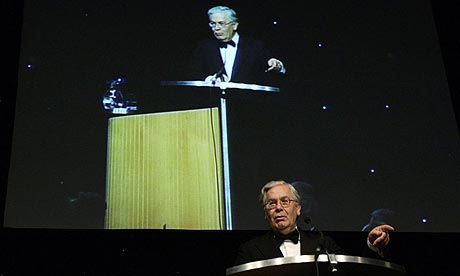 Mervyn King’s forecast Tuesday that the UK is to fall into a recession during 2009 is final confirmation that the economy is slowing. The governor of the Bank of England has avoided using the ‘R’ word as the media and journalists talk endlessly of the downturn.
 Stories of the credit crunch are at large throughout the IT and computing press. Computer Weekly reported that CIOs are now considering whether they simply want to cut costs or use outsourcing in an innovative way to benefit their business.
Competition will be tough over the next two years; mergers and acquisitions, partnerships and closures of firms will have a knock-on affect throughout all industries. Organisations need to remain flexible and agile to a changing economic landscape.
We too have witnessed the consolidation in the technology sector as Oracle announced it is considering purchasing further software products to integrate into its portfolio of suites, including news last week it has bought Primavera Systems Inc.
Further to this we have seen more job losses within the IT sector, meaning costs and operations need to be streamlined ensuring products, programmes and investments are being utilised to near full capacity to improve productivity, lower costs and maximise on transparent reporting and data-consolidation systems.
The UK and Europe needs to maintain growth and development of IT and data systems to remain competitive with the emergence of Asian business. GITEX and the nature of Asia’s IT landscape has changed significantly in the past five years with Offshore Development Centres offerings and lower-costs.
Getting the right blend of onshore/offshore management ensures timely delivery, and higher quality return. The Asian markets can no longer be dismissed as secondary having already proved to be able to meet standards, fulfil business requirements and find solutions at the same level of service as the UK.
Throughout the ‘recession’ decision-makers need to keep the costs low but ensure the IT infrastructure is continually developing to hold their place in the global business community.
Heather Moore, Director of Mircosoft Solutions
Subscribe to:
Posts (Atom)

 Posts
Posts

